Co-Authored Research Paper (unpublished) by Chris Wilson, Joanne Nedeljkovic, Hannah Karunakar, Paulina Rousseau
A design solution to streamline Canada’s refugee application process: Creating a humane, efficient, and accessible experience through ReSponse.
Abstract
This paper explores the development of ReSponse, a platform designed to streamline the Canadian refugee application process by addressing critical human factors. Using Kim Vicente’s Human Factor ladder as a framework, ReSponse targets the Physical, Psychological, and Team dimensions impacting the refugee sponsorship system. By centralizing access to essential documentation, enhancing cognitive and emotional support, and promoting effective sponsor-refugee communication, ReSponse aims to simplify the application process, reduce bureaucratic backlogs, and improve user experience. Anticipating barriers in technology access, government partnership, and sponsor engagement, ReSponse offers solutions to support applicants, ultimately contributing to a more humane and efficient refugee resettlement experience in Canada.
Introduction
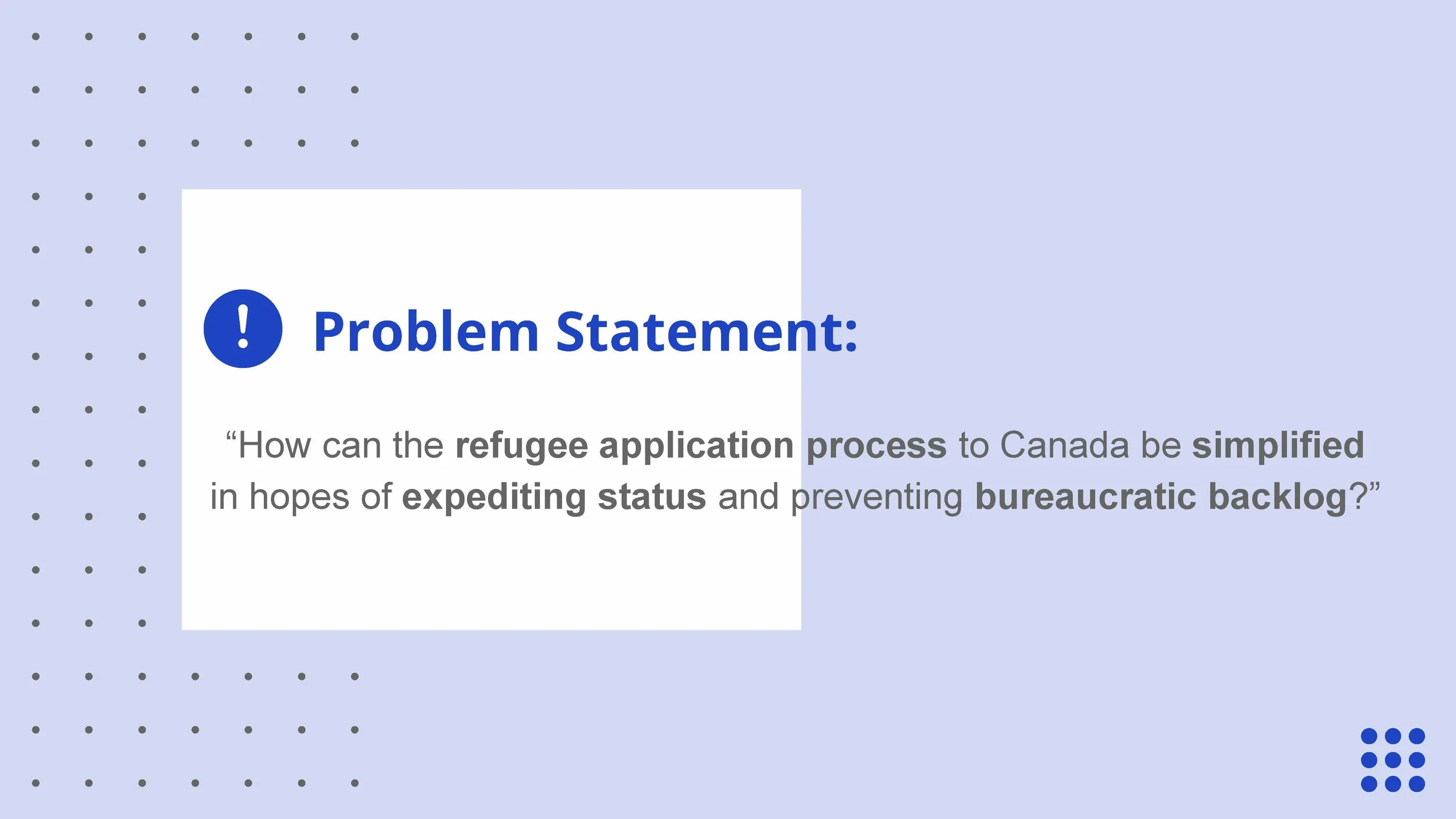
Human factors play a critical role in determining the effectiveness of system design. During the analysis of Canada’s refugee application process, several human-centered flaws were identified. These insights influenced the development of ReSponse, a platform designed to streamline the refugee application process, expedite approvals, and alleviate bureaucratic backlogs.
Using Kim Vicente’s Human Factor ladder, our approach to ReSponse emphasized three foundational rungs:
Physical,
Psychological, and
Team factors.
Each of these considerations shaped our platform, creating a supportive and user-friendly solution space.
Our analysis of physical factors included accessibility and ease of use, while psychological factors addressed the cognitive load and emotional challenges refugees and sponsors face. The team dimension focused on fostering effective communication and mutual support. Together, these insights informed our approach to addressing institutional and governmental demands, ultimately improving the flow of information throughout the application process.
In creating ReSponse, we sought to simplify, improve efficiency, and make the refugee application process more user-friendly. The platform offers a streamlined experience with real-time updates, multilingual access, and 24/7 support, all of which empower users and reduce dependency on bureaucratic systems.
-
The physical aspects we considered include location and accessibility to the documentation required for processing a Privately Sponsored Refugee (PSR) application. Currently, IRCC’s refugee sponsorship resettlement programs lack clarity, leaving it unclear where to obtain information, download files, identify required supporting documentation, and properly format each part to meet the standards of the Resettlement Operations Centre - Ottawa (ROC-O). ReSponse addresses these challenges by providing a centralized physical space where refugees and sponsors can access necessary documents and manage the refugee’s application storyline effectively.
Location: The Canada.ca website is inconsistent, making it difficult to find essential PSR forms. ReSponse addresses this by providing all necessary forms in one place, making the process more transparent and manageable. Additionally, real-time tracking gives applicants clear visibility of their application status.
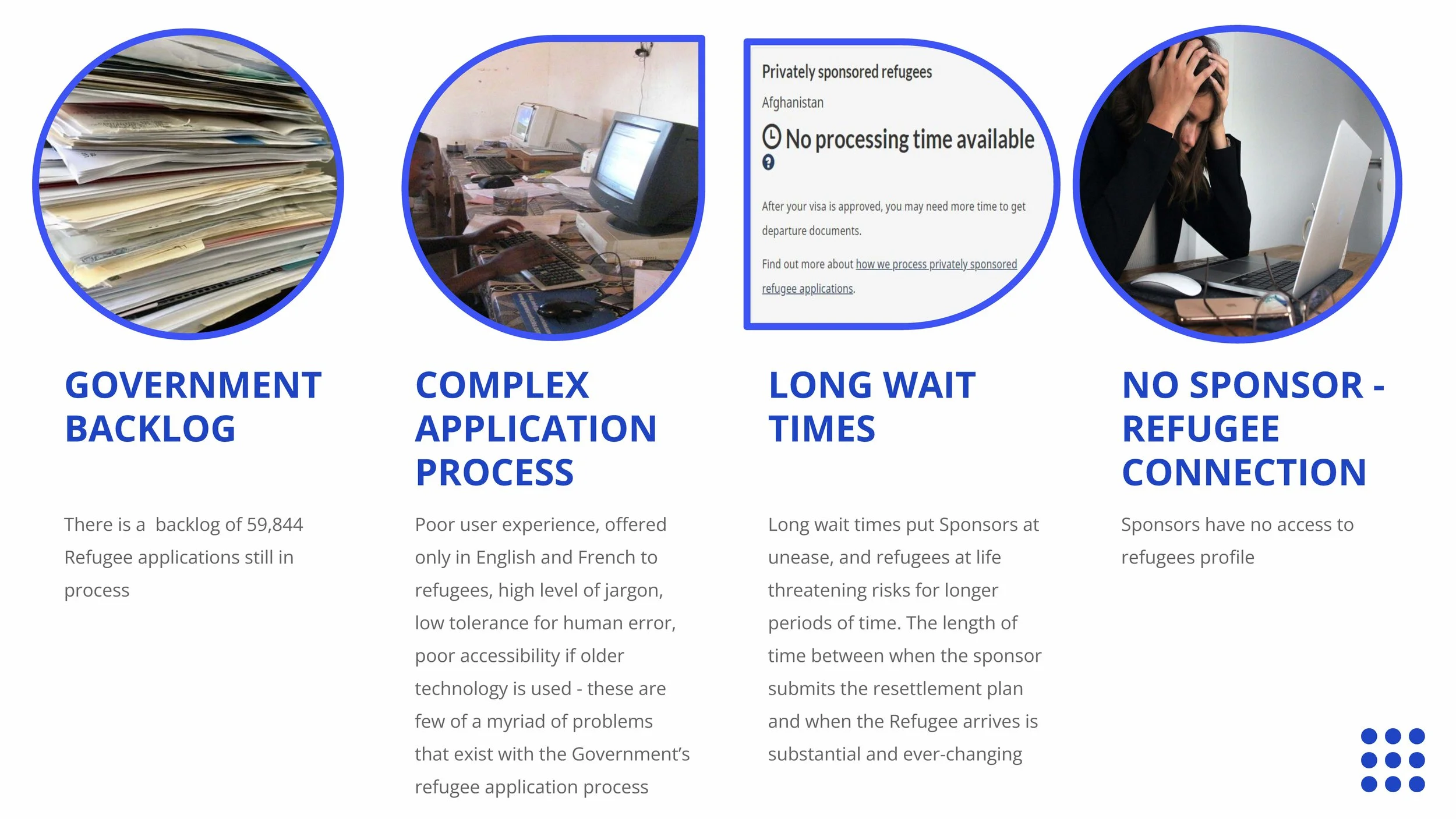
Further information: Currently, four of the five required forms for completing the PSR application are unavailable on the Canada.ca website. Although links are provided, the forms are not downloadable, even when using the required Adobe 8 software. Additionally, content varies depending on the page within Canada.ca; for instance, the How We Process Privately Sponsored Refugee Applications page has about 1,000 words, whereas the Guide to the Private Sponsorship of Refugees Program page contains 8,700 words. Refugees who land on the shorter page may not realize they should seek additional content on another page. By centralizing application instructions and all forms in one accessible location, ReSponse aims to clarify requirements for refugees and sponsors.
Furthermore, it is often unclear when applications have been submitted until they are acknowledged by the Resettlement Operations Centre in Ottawa (ROC-O). ReSponse provides real-time tracking that visually displays key dates, including submission, current processing stage, and any outstanding documents. Our platform securely stores all submitted applications and supporting documents, allowing refugees and sponsors to access them if original copies go missing. This feature reduces stress for sponsors, who would otherwise need to resend documents for the Visa Officer interview later in the process (RSTP, 2021).
Identity and Documentation: Identification issues have delayed the application process. ReSponse partners with organizations like UNHCR and ROC-O to streamline identification using biometric data. This secure method protects user data and prevents delays caused by lost or stolen documents.
Further Information: The challenge of properly identifying refugees has significantly delayed the application process (Treviranus, 2003, p. 200). ReSponse offers a solution by partnering with key agencies, including the UNHCR, CBSA, IRCC, ROC-O, host nations, and overseas visa offices, to streamline identification—a persistent issue for all involved parties. ReSponse links each refugee profile to their fingerprint, utilizing biometric data already collected during the visa process. This secure login method serves as a safety net if original government documents are lost or stolen while refugees live in low-income conditions. Additionally, ReSponse can coordinate with organizations like the UNHCR, which uses iris scans for refugees in temporary settings like Jordan to facilitate secure financial transactions without traditional identification (Dunmore, 2015). Integrating online identification supports ReSponse’s mission to simplify the application process, speed up refugee claim approvals, and accommodate the dynamic and often unstable conditions refugees face.
Formatting: Incorrect document formatting often results in rejections. ReSponse’s auto-formatting capabilities eliminate these errors by ensuring compliance with IRCC standards, reducing stress and fostering a sense of self-sufficiency among applicants.
Further Information: The Resettlement Operations Centre - Ottawa (ROC-O) can reject applications due to incorrect formatting, such as issues with file types and sizes, low DPI on scanned documents, email size limits, file naming conventions, and combining forms into a single file (Government of Canada, Private Sponsorship of Refugees Program). ReSponse addresses these issues by auto-formatting refugee responses and supporting documentation, thereby minimizing human errors. Additionally, the platform is optimized for older technology, ensuring accessibility regardless of device age. By reducing reliance on external help for formatting, ReSponse fosters a sense of self-sufficiency, empowering refugees to take ownership of their applications.
ReSponse also includes editing tools essential for adding missing documents—translations, photos, corrections to submitted sections, and updates to contact information. These updates can be made before the Visa Office Eligibility Interview and even afterward if additional documents are required. By auto-standardizing formatting according to IRCC and ROC-O specifications, ReSponse reduces the likelihood of application rejection, thereby saving time lost to rejections or feedback loops with ROC-O. In this way, ReSponse supports a smoother, more supportive experience for both refugees and sponsors, reducing risks and expediting approvals.
ReSponse addresses key physical challenges in the PSR application process by centralizing document access, providing real-time tracking, and streamlining identification and formatting requirements. This comprehensive approach reduces application rejections, minimizes stress for refugees and sponsors, and fosters a more efficient and supportive application experience.
-
The psychological factors addressed in this solution include refugees' and sponsors' cognitive ability to navigate application requirements, the emotional demands of the process, and the need for cultural understanding throughout. Currently, the process relies heavily on government channels for all information access, including application instructions and status updates. This structure places the burden on refugees to manage a complex Canadian process, often without sufficient context to fully understand it. As the process occurs outside Canadian legal jurisdiction, refugees do not have the same rights as those claiming status within Canada (Labman, 2019, p. 78). This lack of context and limited access to necessary information leave refugees dependent on a system they may struggle to navigate effectively.
Autonomy: The current process places excessive reliance on IRCC channels. ReSponse promotes self-sufficiency by giving refugees and sponsors access to reliable information, videos, and resources that clarify expectations and procedural requirements.
Further information: The Government of Canada (GOC) has structured the Privately Sponsored Refugee (PSR) application process to create subtle barriers at the border, aiming to retain significant control over immigration through dependency on the IRCC for procedures, information, and decision-making (Labman, 2019, p. 46). Government channels are often the only secure source of accurate information for refugees and sponsors, yet these channels suffer from extensive backlogs, limited updates, and minimal support throughout the process. By building autonomy into this system, ReSponse enables refugees and sponsors to become more self-sufficient in navigating application challenges. The platform empowers refugees by granting them access to essential resources, reducing their dependency on government processes as they work toward resettlement solutions (Dykstra-Devette, 2018, p. 334).
The GOC favors this highly structured, administrative approach because it allows greater control and selectivity in resettlement while transferring some responsibilities to sponsors (Labman, 2019, p. 69). ReSponse counters these barriers by providing reliable information, including instructional videos, examples of supporting documents, and clear guidelines on sponsor-refugee expectations within the resettlement plan. This autonomy enables refugees to express their needs, develop communication skills, and navigate their application journey, which is critical to determining their status. Ultimately, ReSponse fosters the development of autonomy for refugees—a key objective of the Government of Canada.
Understanding: The platform provides context for questions within the application, such as the skills needed to succeed in Canada, allowing refugees to better connect with visa officers. ReSponse’s community feature also helps refugees learn from one another and better prepare responses.
Further Information: The Canadian refugee application process is highly selective, serving as the primary means to determine if a refugee meets the criteria for Canadian status (Labman, 2019, p. 62). For a successful application, it is essential that the refugee can establish a connection or provide evidence that may persuade the visa officer of their ability to integrate into Canada. One application question, for instance, asks the refugee to "7. D) Give examples of any work experience, skills and / or personal qualities that would assist you in successfully settling in Canada" (Schedule 2 Refugee outside Canada, p. 3). However, this raises two issues: first, how would the refugee understand what "success" in Canada entails, and second, where would they find information to accurately interpret this?
ReSponse addresses these challenges by empowering refugees with direct access to a community of refugees and sponsors. Currently, the primary resource for refugees to understand the Canadian context is their sponsor (Dykstra-Devette, 2018, p. 326). By connecting with the ReSponse community, refugees can gain insights into the cultural context they may be missing, allowing them to incorporate this informal knowledge into their application responses (Dykstra-Devette, 2018, p. 331).
Clarity of Process: The lack of consistent guidelines on UNHCR designation requirements creates confusion. ReSponse addresses this by generating customized checklists based on application type, ensuring clarity and avoiding incomplete applications.
Further information: Despite Canada’s long-standing financial support for the UNHCR, the Canadian application process does not require Visa Officers to consider the UNHCR designation, leading to inconsistencies regarding whether it is necessary for refugees before applying for a PSR program (Labman, p. 73). For example, in Ghirmatsion vs. Canada, the case suggested that the UNHCR designation was not even a factor in the Visa Officer’s decision-making (Labman, p. 74). This inconsistency is compounded as only certain resettlement programs, such as Group of Five and Community-based Sponsors, require the UNHCR designation (IRCC, 2016, p. 26). Additionally, Sponsorship Agreement Holders (SAHs) have their own process outside the IRCC, prioritizing refugees with a Refugee Status Determination (RSD) (RSTB Best Practices Series V.1).
This lack of clarity surrounding RSD requirements creates challenges for sponsors and refugees alike, as an error can lead to incomplete applications and result in termination of both applications (Government of Canada, 2021, How We Process Privately Sponsored Refugees). Moreover, obtaining an RSD is time-consuming, and there is no guarantee that a UNHCR RSD will result in Canadian refugee status approval (Labman, 2019, p. 74).
ReSponse addresses these issues by clarifying each stage of the application process. When sponsors and refugees select a resettlement program, ReSponse generates a list of all required documents and forms. To prevent errors, the platform prompts users when an RSD is needed and temporarily halts the application until the requirement is met.
ReSponse addresses the psychological challenges in the PSR application process by promoting autonomy, providing cultural context, and ensuring clarity in application requirements. By fostering self-sufficiency and reducing dependency on government channels, ReSponse enables refugees and sponsors to navigate the application process with greater confidence and understanding.
-
Another essential element of Vicente’s Human Factor model we considered is the "Team" aspect. The ReSponse platform pairs sponsors and refugees, effectively creating a team that works together through the entire application process, including the post-application phase. In analyzing the problem space, we identified gaps in communication, community, and coordination as significant human factor flaws. This "team" concept extends beyond just the sponsor and refugee to include visa officers and other key institutional stakeholders responsible for status approvals. The complex sponsorship/refugee system requires that an “affinity with human nature must be achieved at the team level” (Vincente, 2004, p. 156). Experience mapping reveals that the current system falls short in this regard, but ReSponse addresses these gaps by tailoring features to support each team member’s needs for improved communication, community, and coordination.
Communication: The uneditable nature of current forms hinders communication. ReSponse allows real-time updates and edits to ensure the visa office, sponsors, and refugees stay connected throughout the process, avoiding the administrative delays of traditional methods.
Editable Application Form
The current resettlement application process is largely unresponsive to the needs of both sponsors and refugees. Improved communication between the IRCC, Visa Officers, and sponsors has been recommended to address these issues (Treviranus, 2003, p. 187). A significant limitation of the current system is that sponsors and refugees cannot communicate effectively with key information holders or contact one another directly, which restricts their active participation in the application process. Furthermore, once an application is submitted, making edits is extremely difficult, as changes require physical copies to be re-submitted to the ROC-O, IRCC, and the sponsor before the visa officer interview. In 2015, the time between application submission and Visa Officer Eligibility Interview was reported to be as long as 54 months (IRCC, 2016, p. 23), during which refugees often move multiple times, necessitating numerous address updates to IRCC, ROC-O, and the sponsor—a tedious administrative burden (Treviranus, 2003, p. 197).
ReSponse, with its real-time accessibility and editable forms, opens up lines of communication between refugees, sponsors, and visa officers. As interview preparation progresses, users can address mistakes or missing details in the initial submission by making corrections and re-submissions (RSTP, 2021) directly through the platform. ReSponse also accommodates significant updates to the refugee's status, such as the addition of a family member, which must be included in the initial application to ensure future eligibility for Canadian resettlement.
Translation and Language Integration:
Language barriers often prevent refugees from fully expressing their stories. ReSponse provides multilingual support and coordinates translation services to ensure accurate representation of each applicant’s case.
Throughout the application process, refugees are required to communicate information that may be difficult for them to understand fully, given language barriers. For example, one of the required forms asks refugees to take full responsibility for any translation or assistance they use while completing the form (Schedule 2 Refugee Outside Canada, p. 1). Without proficiency in an official language, refugees must rely on interpreters or translators to convey their stories accurately, including during the critical Visa Office Eligibility Interview.
To prevent potential delays at the interview, ReSponse facilitates the process of arranging a translator, allowing refugees to specify whether they require a male or female interpreter for religious or cultural reasons. While the responsibility currently rests on refugees to secure a reliable and accurate interpreter, ReSponse provides multilingual access to the application form and expands resources to help refugees communicate their story effectively. This approach enables refugees to make inquiries and adjustments if they feel their narrative is not being accurately conveyed.
Community: ReSponse fosters a supportive community that connects refugees with sponsors based on shared values, creating a network where sponsors can also support each other.
Cultural integration:
ReSponse promotes two-way communication between sponsors and refugees, enabling sponsors to serve as advocates within the institutional process, representing the refugee's needs as they arise (Cooren, 2020, p. 8). As the refugee's story becomes more fully represented within the ReSponse platform, it may resonate more effectively with key decision-makers, such as those at the GOC, IRCC, and Visa Office, potentially creating a shared space that fosters empathy (Cooren, 2020, p. 16).
ReSponse also provides a community interaction space within the typically rigid institutional process. Refugees, regardless of their Refugee Status Determination (RSD), can register on the platform. While Canada’s PSR program prioritizes refugees who already hold a designation, ReSponse will match potential sponsors and refugees based on shared values and interests. Lanphier (2003) notes that sponsors often seek specific attributes in potential refugees, including cultural values, political beliefs, religion, and traditions related to family roles and food habits. ReSponse leverages these similarities to match sponsors and refugees, even if they have no prior connection (Lanphier, 2003, p. 253).
Additionally, the platform provides sponsors with a message board, allowing them to connect with other sponsors, seek answers to common questions, and collaboratively address issues. This feature enables sponsors to form supportive sub-teams within ReSponse, fostering a shared community experience.
Networking:
The relationship between a sponsor and a refugee can be complex, as sponsors serve as critical links to the institutions and resources needed for refugees to successfully establish themselves in Canada (Lanphier, 2003, p. 246). Currently, the application process lacks a feedback loop to support how sponsors and refugees navigate this relationship, leaving potential challenges unaddressed. ReSponse collects valuable information within its online community to inform future improvements and offers a broader networking tool that goes beyond the immediate sponsor-refugee pairing, a feature missing from the current system.
Presently, the responsibility of identifying and addressing potential barriers for the refugee rests solely on the assigned sponsor. ReSponse expands this support network by allowing other sponsors and refugees to contribute to the process context, creating a more holistic approach (Lanphier, 2003, p. 250). This open dialogue between multiple sponsors and refugees helps alleviate the loneliness refugees may feel during the application journey (Lanphier, 2003, p. 249). Networking maintains active engagement between sponsors and refugees throughout the lengthy 36 to 54-month process (IRCC, 2016, p. 23), which is crucial for successful integration into Canadian society.
Coordination: Current redundancy across application forms slows the process. ReSponse streamlines data entry by consolidating information across documents, reducing duplication and accelerating application completion.
Mitigation of Redundancy:
The sponsor application process currently suffers from significant redundancy and duplication, leading to delays, backlogs, and unnecessary frustration among sponsors. Sponsorship Agreement Holders (SAHs) who co-sponsor individuals within their communities require sponsors to complete a separate application in addition to the government forms, even though both sets of forms often contain nearly identical questions for both sponsor and refugee (RSTB, 2021 - Best Practices Series V.1; Labman, 2019, p. 60).
For example:
· IMM 0008E: Schedule 2 Refugee Outside Canada (Page 1) includes, "Please describe in as much detail as possible the specific events which led you to flee your home country... For each incident, specify the date (month/year) the event(s) occurred."
· In contrast, the SAH form for the Mennonite Central Committee (MCC) in Saskatoon asks, "Do you fear persecution for one of the following reasons? Race; Political Opinion; Religion; Nationality; Involvement with a group that is targeted by your government?... Please give detailed reasons why you fear persecution. (For example, what exactly happened to you? Who has persecuted you?)"
ReSponse simplifies this process by consolidating all relevant data in a single, accessible platform that allows stakeholders to extract essential components for the application, which can be repurposed across various sections. This approach reduces redundancy and streamlines the application process for all involved parties.
Expectations: By allowing refugees to access the sponsor’s resettlement plan, ReSponse fosters transparency, helping both parties align on expectations. This mutual understanding can prevent misunderstandings and support successful resettlements.
Government monitoring of PSR resettlement plans is currently insufficient once refugees arrive in Canada (IRCC, 2016, p. 41). These plans, submitted 36 to 54 months before the refugee's arrival, sometimes lead to issues for sponsors over time. For example, in a group of five sponsors, one may drop out, requiring a replacement (IRCC, 2016, p. 23). Under the current system, refugees lack access to these resettlement plans, and even after arrival, it remains unclear what provisions sponsors have promised for the 12-month support period. This uncertainty leaves refugees vulnerable, especially if they fear that voicing concerns could jeopardize the sponsor's commitment. ReSponse addresses this by engaging refugees early in the application process to review and contribute to the resettlement plan, supporting the idea that “expectations shape our behaviour and that behaviour shapes outcomes” (Page, 2017, p. 7). Aligning sponsor commitments with refugee needs helps prevent sponsorship breakdowns due to unmet expectations, and by giving refugees access to the resettlement plan, all participants can better understand their roles when the refugee arrives in Canada (Lanphier, 2003, p. 248).
ReSponse also facilitates the discussion of cultural and religious expectations, helping to shape the sponsor-refugee relationship. Through its online community of past, present, and future refugees and sponsors, ReSponse creates opportunities for mutual understanding. This approach can help avoid scenarios where refugees feel pressured to conform to their sponsors’ beliefs or practices, as occurred when many Vietnamese Buddhist refugees from 1976 to 1980 felt compelled to join Christian churches due to sponsor influence (Lanphier, 2003, p. 243). Establishing clear expectations early in the process can reduce misunderstandings that lead to relationship breakdowns.
-
Three main barriers were identified in developing ReSponse.
The first potential barrier is the assumption that refugees have sufficient access to and understanding of the necessary technology. The second is the presumption that the government would be willing to partner with ReSponse. The third potential barrier is the possibility that sponsors may be unmotivated or unwilling to communicate with refugees prior to their arrival.
-
Cultural influences significantly impact technology ownership and usage, varying widely from country to country. For instance, a study on refugees relocating to Canada found that many Syrian refugees had only one phone per family (Sabie & Ahmed, 2019). Their experience with internet access was that it was costly, limited, and sometimes restricted, especially in the pre-civil conflict period (Sabie et al., 2019). Additionally, technology in Syria served primarily job-oriented purposes, with computers mainly used for work-related data entry, which meant that men, as primary breadwinners, generally had more access to and experience with technology than women (Sabie et al., 2019).
These cultural norms and limited access could hinder some refugees from using ReSponse. To address this, ReSponse is designed to be compatible with older devices and slower internet connections. For refugees without direct access to technology, ReSponse would collaborate with governmental or UNHCR offices to establish access points where officers could input a refugee’s information, provide updates, and complete their profile. Nonetheless, prevailing cultural norms, such as limited access for women in some home countries, may still present challenges.
-
Currently, ReSponse’s prototype connects sponsors directly with refugees, but future plans include linking key stakeholders like the IRCC and UNHCR, who hold critical information on refugee profiles. This integration would streamline communication and centralize the refugee approval process, reducing duplication in establishing refugee identity and status. However, a potential barrier is that these organizations may resist adopting a more efficient process that could lessen their decision-making power or impact their “good samaritan” image. Canada’s humanitarian efforts have bolstered its global political influence, as seen in its role as the second Chair of the Central America and Mexico Comprehensive Regional Protection and Solutions Framework (MIRPS) Support Platform (canada.ca, 2021). Sharing this influence with other organizations could dilute Canada’s reputation as a humanitarian leader and potentially impact its global partnerships, as the refugee crisis currently reinforces Canada's positive image on the international stage.
-
A third potential barrier for ReSponse is sponsor burnout from early communication with refugees. Research on refugees moving to Canada found that "with our privately-sponsored refugees, the first source of learning is their sponsors. They say that sponsors are the main destination they go to for acquiring knowledge and skills, such as how to use public transit, do online banking, and register the kids in school" (Sabie et al., 2019, p. 224). The sponsor application process is already demanding, and frequent communication with a refugee undergoing their own intensive process may be overwhelming for sponsors. This added interaction could take a toll on sponsors who are already shouldering financial and emotional responsibilities to aid the refugee’s integration. Unclear boundaries for sponsors engaging in less formal communication, like social media, have led to burnout, as seen in USA GRA offices, where case workers experienced exhaustion from ongoing contact through platforms like Facebook. However, this open communication was also shown to make the transition easier for refugees (Dykstra-Devette, 2018, p. 338).
Despite these challenges, two-way communication is essential to ReSponse’s approach. As political philosopher Iris Marion Young notes, inclusive public infrastructure requires that "both groups should be able to communicate with each other by telling their stories” (Sabie et al., 2019, p. 219). ReSponse addresses this potential barrier by structuring communication through prompts, allowing both users to respond only to the specific prompt, thus limiting unstructured interactions. This format helps sponsors and refugees build rapport gradually and in a manageable, regulated manner before the refugee’s arrival.
-
In designing ReSponse, we carefully considered the physical, psychological, and team human factors, as well as potential barriers to implementation. This analysis allowed us to address these human factors effectively and anticipate both opportunities and challenges for ReSponse. With these insights, we are positioned to create a more reliable, efficient, and communicative sponsor-refugee application process. By reducing bureaucratic obstacles and enhancing the application experience, ReSponse aims to sustainably improve outcomes for thousands of sponsors, refugees, IRCC officers, and UNHCR officers—contributing to the resolution of the refugee crisis one application at a time.
-
Burning Platform
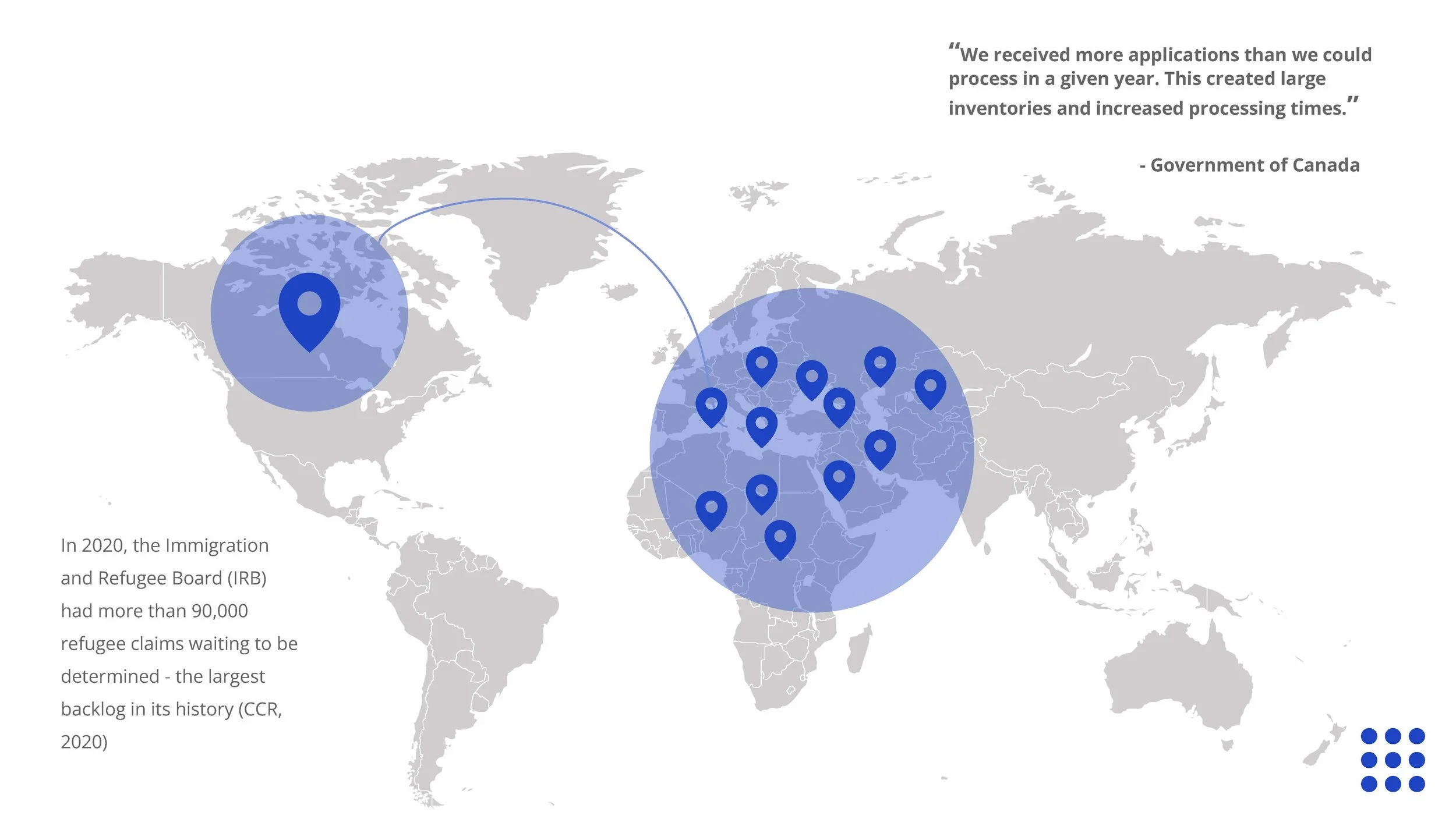
The refugee migration crisis is an urgent global issue, and Canada’s current application process for refugees and sponsors is fraught with delays, inefficiencies, and bureaucratic barriers that risk lives. Refugees seeking safety face an overwhelming and outdated system with long backlogs, complex requirements, and limited accessibility. These obstacles—aggravated by the impacts of COVID-19 on processing times—prevent timely resettlement, leaving individuals stranded in unsafe conditions. The Immigration and Refugee Board (IRB) is experiencing the largest backlog in its history, with over 60,000 cases awaiting processing (IRB, 2021), while privately sponsored applications are also constrained by limited resources and outdated processes (Johnston, 2019).
This situation demands an immediate and effective solution, not only to alleviate Canada’s strained immigration system but to fulfill the country’s humanitarian commitment to refugees. The stakes are exceptionally high, with each delay risking the safety, security, and freedom of individuals fleeing violence and persecution. As Canada faces mounting pressures to increase refugee intake and improve processing timelines, ReSponse is positioned as a necessary intervention. By simplifying and modernizing the application process, ReSponse aims to eliminate bureaucratic bottlenecks, reduce wait times, and provide critical support to refugees and sponsors, ultimately saving lives and upholding Canada’s global humanitarian responsibilities.
-
The solution to Canada’s outdated refugee application system is a secure, digital platform, ReSponse, which centralizes the application process across all stakeholders—from refugees and sponsors to UNHCR and IRCC officers. This platform offers a comprehensive space for sponsors to connect with other sponsors, refugees and sponsors to apply for status, receive real-time application updates, and access each other’s profiles. With a recommended pairing algorithm, ReSponse aims to improve match accuracy between sponsors and refugees. This platform addresses the existing issues of an unclear process, long wait times, and limited autonomy, providing clarity, connectivity, and control over the application process.
Named by merging “refugee” and “sponsor,” ReSponse represents the platform’s mission to respond to the refugee crisis and alleviate the backlog in applications. The name emphasizes its core value proposition and sets a compassionate tone for users about the care and intentionality behind the platform.
Additionally, the platform follows Web Content Accessibility Guidelines (WCAG) 2.0, which improve accessibility for people with various disabilities, including visual or hearing impairments, cognitive challenges, limited mobility, and more. These guidelines also make the platform easier to use for everyone (WCAG, 2008).
The platform also facilitates knowledge exchange among sponsors. While sponsors traditionally rely on faith or community groups for information sharing, ReSponse offers an open forum with frequently asked questions, where current and future sponsors can seek guidance. This feature aims to manage sponsor expectations, ultimately fostering healthier relationships between sponsors and refugees.
Additional support is provided through a 24/7 helpline and chatbot to address user questions. Designed to operate on older technology accessible to refugees, the platform will initially be available on desktop browsers and will expand to a mobile app, making real-time updates on application status easily accessible—a gap in the current system where applicants face long waits without visibility into their progress.
ReSponse will support multiple account types for UNHCR officers, refugees, sponsors, and IRCC officers. By simplifying the application process, ReSponse will reduce workload for IRCC and UNHCR officers, as the platform auto-standardizes profiles and applications, leaving officers with streamlined approval or denial responsibilities. In the future, with all relevant stakeholders on the platform, communication between these groups will improve, such as allowing IRCC officers to easily connect with UNHCR officers regarding refugee profiles, ultimately expediting and streamlining the application process.
-
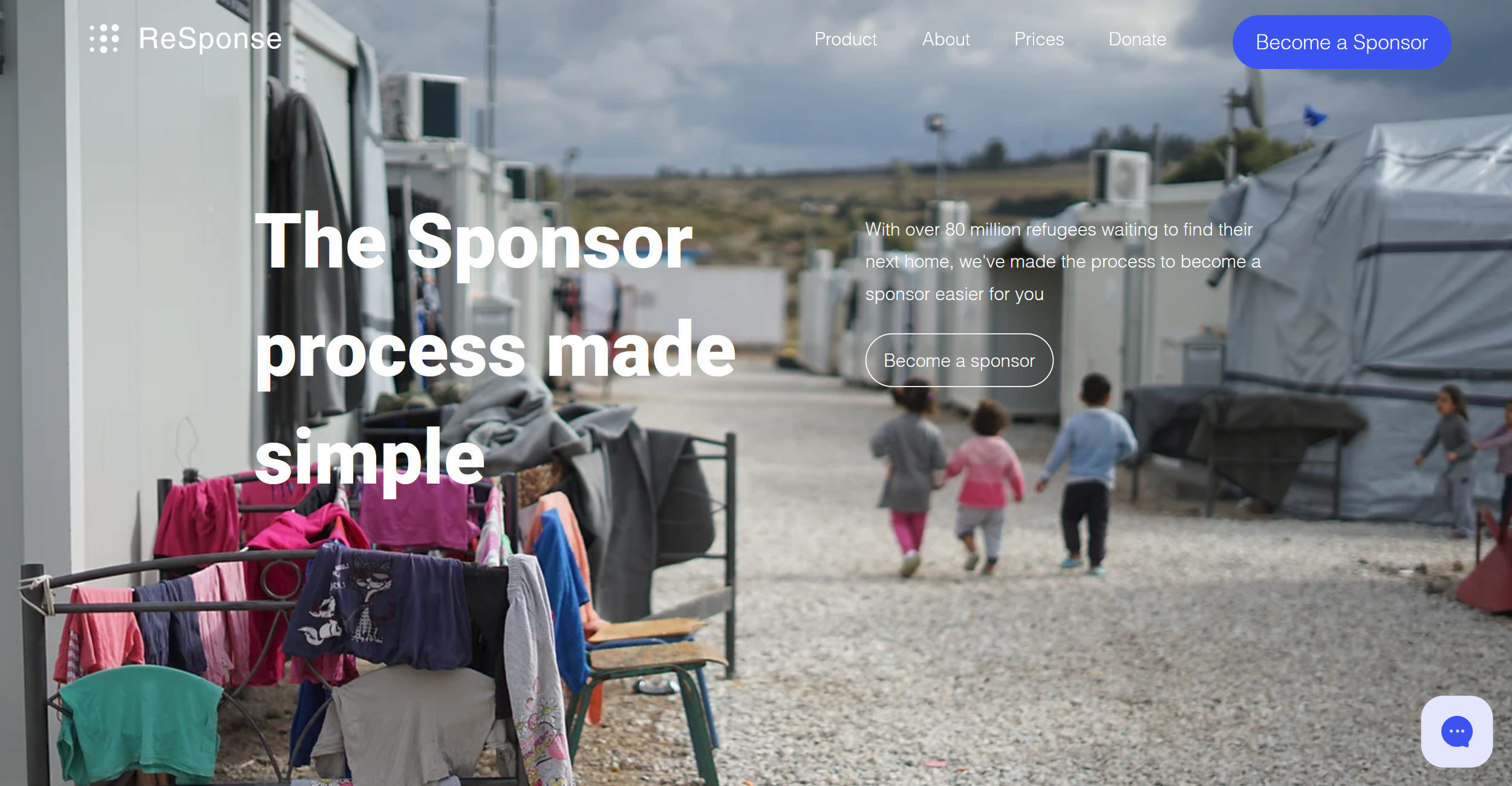
A prototype of ReSponse is available here, with the following summary referencing its key features.
The ReSponse landing page serves as one of the team's initial prototypes and acts as a minimum viable product (MVP) to test market interest before fully developing the platform (Osterwalder et al., 2014, p. 222). This landing page is designed to showcase the platform’s main value propositions to its target audience—potential sponsors—by providing information on the application process and steps required to become a sponsor.
Our MVP prioritizes the sponsor-refugee connection, as sponsors are highly motivated stakeholders who seek an improved application process and are most likely to support the platform financially. Sponsors are already required to contribute a minimum of $16,500 to sponsor a refugee (Associated Gospel Churches, 2021).
To design the prototype, we mapped out a user flow based on previous experience mapping, detailing the process sponsors and refugees would follow. Although we could not conduct UX testing for this prototype, we modeled the navigation of the simplified application process after SimpleTax’s well-tested design. SimpleTax has successfully partnered with the government to simplify complex applications, offering users an easier way to complete tax forms through features like auto-filling with a SIN number, simplified language, accessibility standards, and an efficient user flow.
-
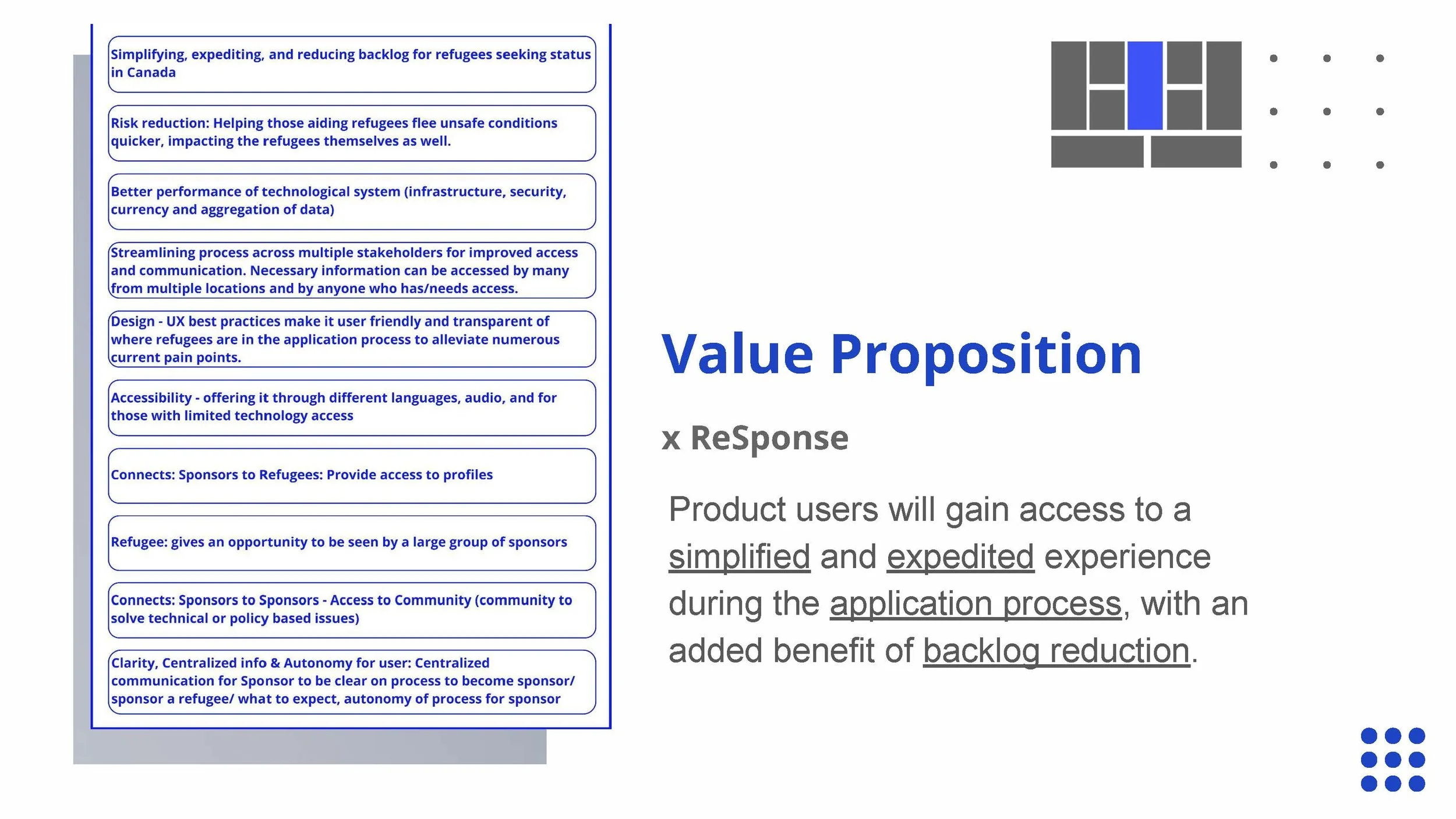
Please note: A full explanation of the Value Proposition is available under the Business Model Canvas section below.
VP1: Connection to Sponsor Community
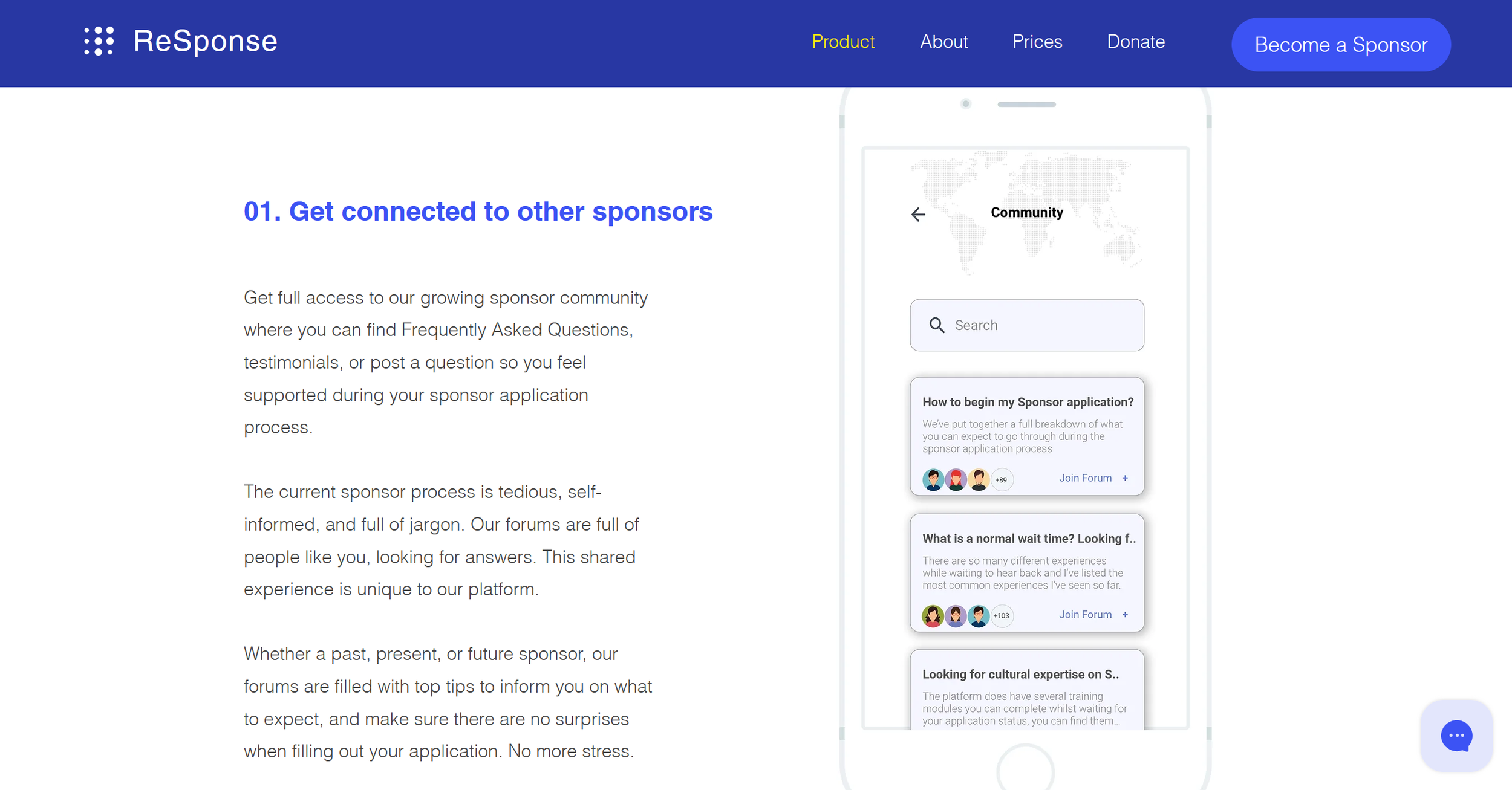
The first value proposition for ReSponse is its connection to a sponsor community, which is currently difficult to find for sponsors. Offered as a freemium model, sponsors can join the community for free but must pay to submit an application through the platform. A mock-up of the sponsor community page displays several forums organized by frequently asked questions. Here, sponsors can join discussions and read responses from other sponsors—whether they are experienced, current, or potential sponsors. Outside of the SAH association, there is currently no space on the Government of Canada website where sponsors or refugees can share experiences and build a community. One of ReSponse's goals is to provide a centralized space where sponsors can connect and learn from the personal experiences of others who have sponsored refugees.
VP2: Simplified Application Process
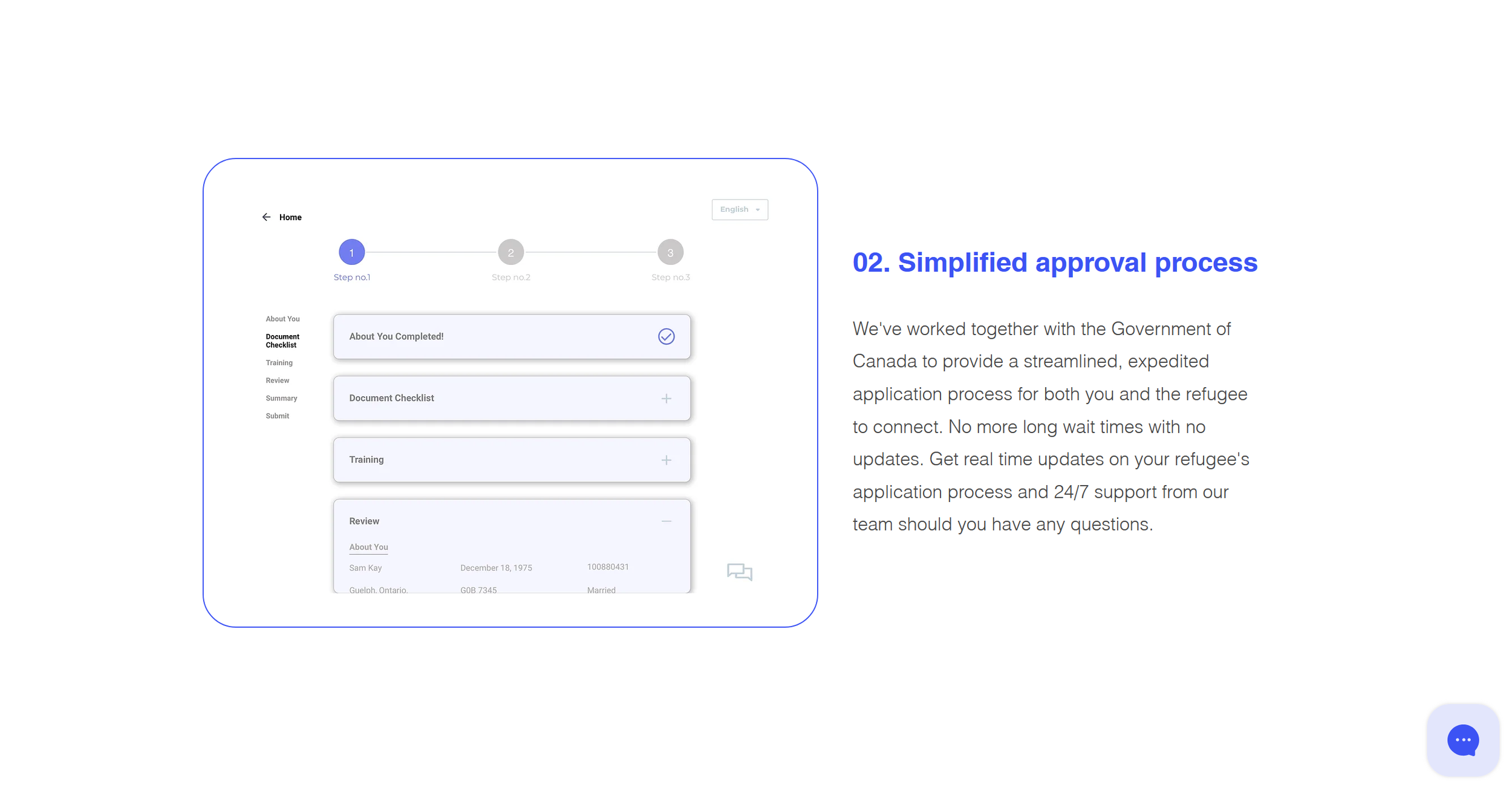
The second value proposition is a simplified application process. By purchasing access to ReSponse, sponsors bypass the limitations of the bureaucratic backlog and outdated technology currently used on the Government of Canada’s application website. With ReSponse, sponsors enjoy an improved user experience, a streamlined process, real-time updates, and 24/7 support. They avoid the risk of rejection due to minor human errors that the government website has a low tolerance for, such as incorrect PDF formats, outdated Adobe versions, and unstandardized file sizes and names. These small mistakes often result in application failures, denying refugees the chance to escape dangerous conditions. ReSponse auto-standardizes formats to comply with IRCC and ROC-O requirements, operates in real-time, and sends updates to the visa office, ROC-O, IRCC, and the sponsor if new information is added by the refugee. This allows sponsors to review updates and provide any additional support or translation needed. Additionally, ReSponse adheres to WCAG 2.0 accessibility standards, offers platform interaction in multiple languages, provides audio versions for blind users, and applies color contrast standards for colorblind users. The platform also simplifies complex language and includes tooltips for challenging questions, making it accessible on older devices for refugees with limited access to new technology. Our goal is to reduce application risks, expedite approvals, and ensure applicants feel supported.
VP3: Connection Between Sponsor and Refugee
The third value proposition on the landing page is the ability for sponsors to “connect with a refugee.” This section highlights the platform’s functionality, allowing sponsors and refugees to access each other’s profiles, receive personalized match recommendations, or “follow” a refugee. Sponsors complete a profile outlining their criteria, including preferred refugee location, language, family size, political affiliation, and level of endangerment (such as being in a refugee camp, neighboring country, or safe house). Establishing a connection between sponsor and refugee before arrival is essential, as sponsors often serve as refugees' primary link to necessary resources, helping them establish themselves securely in Canada (Lanphier, 2003, p. 246). Sponsors can identify potential barriers and provide context, making the process less isolating for refugees (Lanphier, 2003, p. 250). ReSponse fosters a two-way dialogue and an exchange of information, helping refugees and sponsors build healthier relationships and manage expectations before the refugee arrives (Lanphier, 2003, p. 249). This opportunity for connection is currently unavailable on the Government of Canada website or other resources.
The landing page design includes profiles of several refugees, allowing sponsors to “follow” a refugee and stay informed about their application process. This feature also creates an option for individuals who are not yet ready to sponsor to donate to a refugee’s cause. Refugees are organized by priority status: “emergency priority,” “urgent,” and “in need.” This design element demonstrates the platform’s ability to help sponsors learn about and connect with a refugee’s story before making a commitment. ReSponse provides both sponsors and refugees with greater autonomy over their futures in Canada.
-
Criteria
Through a combination of stakeholder needs analysis, experience mapping, and situational analysis, the ReSponse team established a set of criteria to evaluate solution success. Once identified, these criteria were ranked in order of priority:
The solution must be on a secure platform that protects all stakeholders.
It must comply with Canadian law and adapt to changing policies.
User experience should be prioritized with a human-centered design perspective, ensuring refugees, IRCC officers, and others have the information they need. UX best practices should be incorporated, such as error messages to prevent progression in the case of errors and progressive disclosure.
The solution must allow for editing and review, including adding family members at a later date.
It should comply with Web Content Accessibility Guidelines (WCAG) 2.0, supporting features like language independence, standard color contrasts, alternative text for images and text, and more.
The platform should provide a feedback system and helpline for refugees and applicants.
It must accommodate refugees’ limited access to technology, for instance, allowing applications from internet cafes or possibly from Canadian consulates.
The platform should improve application wait times and set clearer expectations for refugees regarding updates.
Real-time updates across channels are essential for the application process.
Improved communication between stakeholders is necessary, enabling feedback and direct communication where needed.
The solution was tested against these success criteria. Throughout brainstorming sessions, these criteria guided discussions, ensuring that the platform would enable sponsors and refugees to easily apply and connect. Please click this link to see the full brainstorming of the criteria created.
-
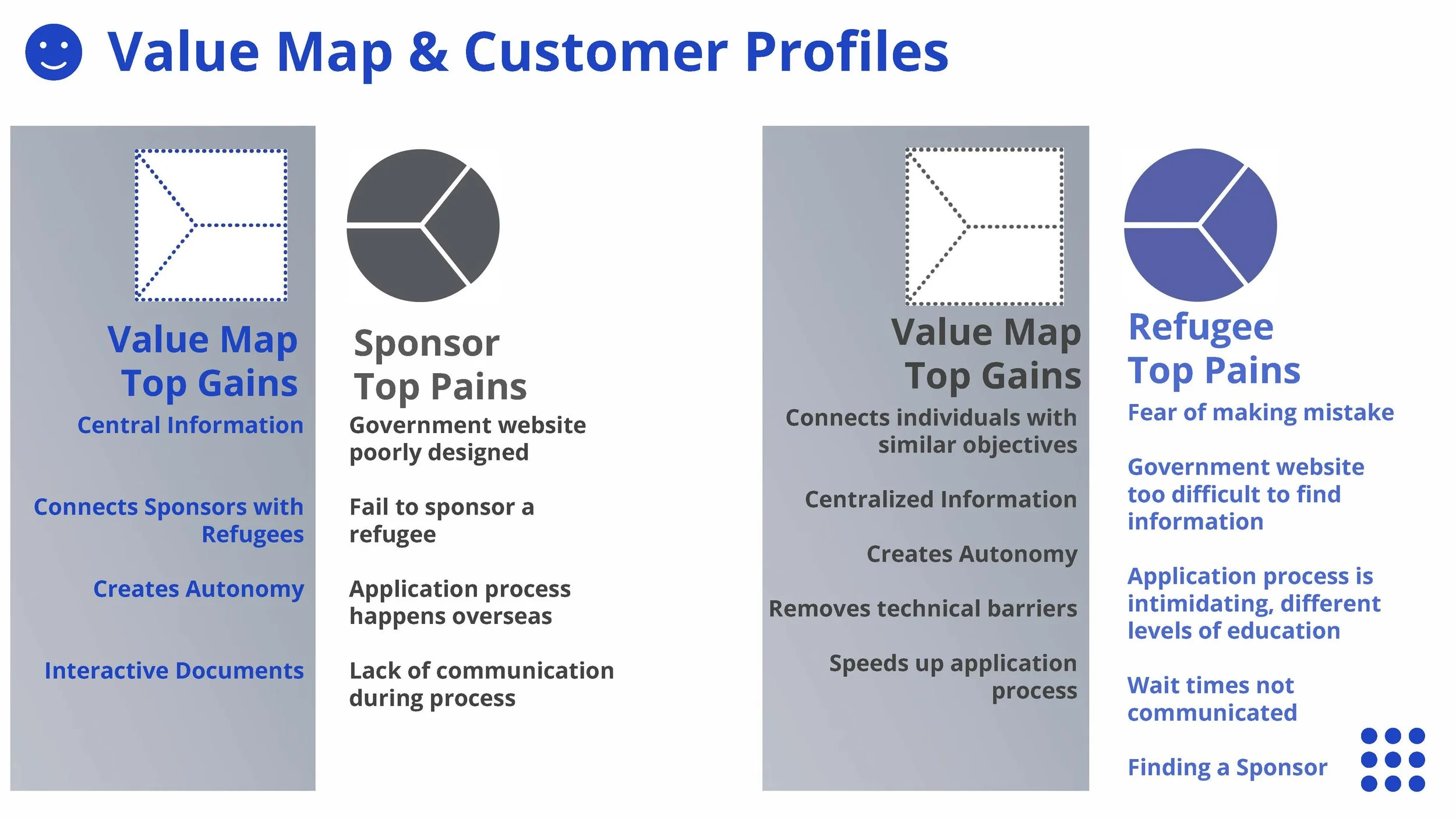
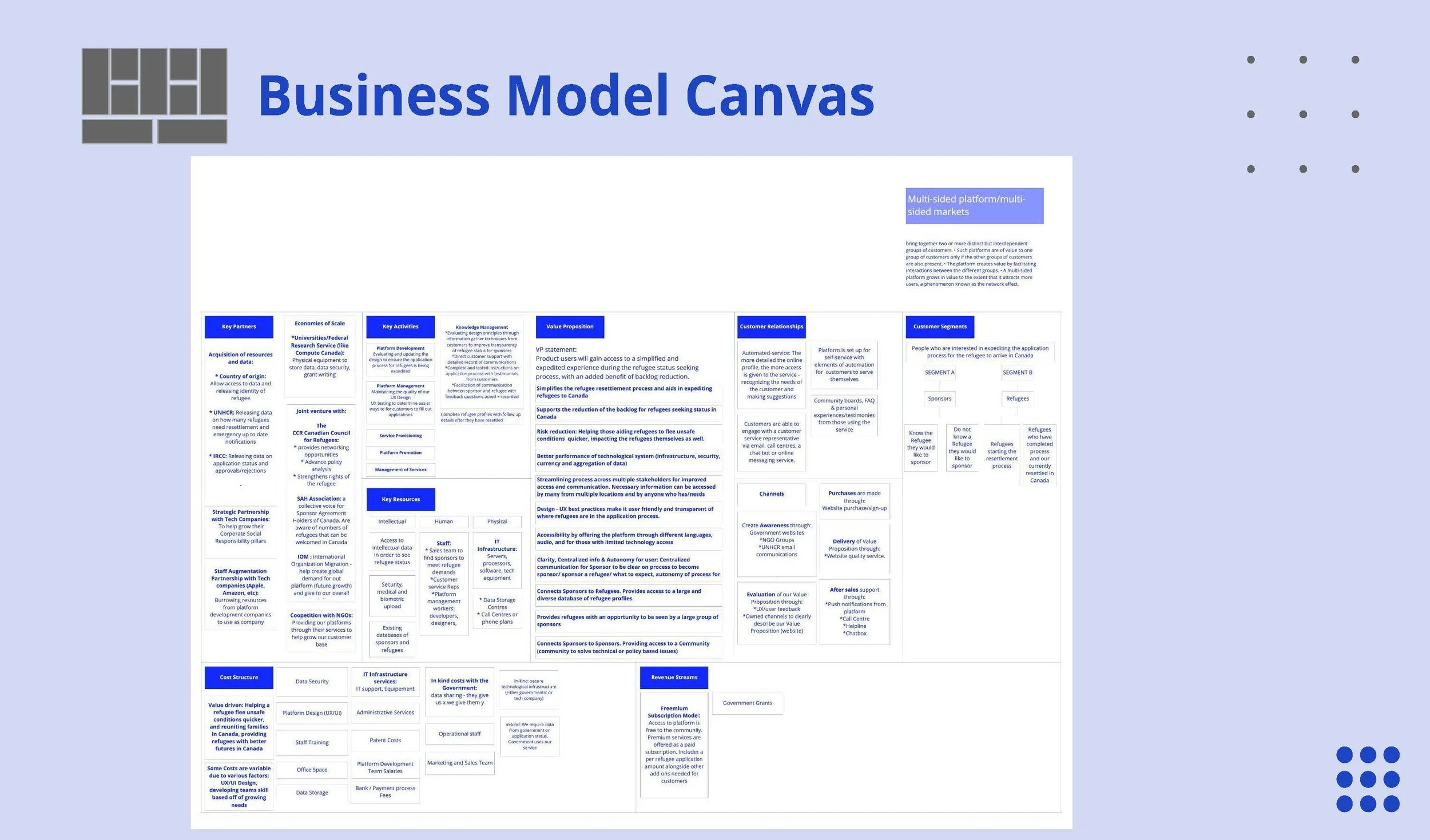
To identify which stakeholders would form ReSponse’s customer segment, multiple client profiles were created based on the stakeholder matrix, and value maps were developed for each. Initially, we considered the Government of Canada, IRCC, and ROC-O as the primary customer segment; however, research shifted the focus to Refugees and Sponsors, who both play a vital role in the Canadian Refugee application process but have limited influence over it. Client profiles and Value Maps To understand why the Government of Canada was deprioritized, this link.
-
Within the Refugee client profile, we considered different scenarios to reflect various stages in the application process, impacting how refugees interact with the value map. Scenarios include:
Refugee applying for RSD through UNHCR and seeking referral to Canada via a Group of 5, community sponsorship, or government sponsorship (BVOR or GARS).
Refugee with a connection in Canada, without RSD, applying through the PSR program.
Refugee without Canadian connections or access to an RSD designation via UNHCR or Host Nation.
Refugee currently queued at the IRCC office.
Refugee who has not begun the application process.
Refugee with accepted claims by the Overseas Visa Office, waiting for a permanent resident visa.
Refugee resettled in Canada, pursuing family reunification within a one-year window.
Refugee resettled in Canada, wishing to mentor others through the process.
Throughout these stages, refugees experience a paradox of physical and psychological challenges. They navigate harsh conditions in refugee camps or temporary asylum accommodations, seeking safety in substandard living environments while striving to maintain their health for medical exams required in the application process. Additionally, refugees may experience mistrust of authorities, uncertainty, and ongoing trauma. Every refugee story is unique, forming the cornerstone of their application, yet there is inconsistency in how applications are assessed in overseas visa offices, and limited access to Canadian legal frameworks.
Essential tasks for refugees include:
Fleeing unsafe conditions and securing acceptance from a country signatory to the 1951 Refugee Convention.
Applying for RSD designation through UNHCR or Host Nation, requiring documentation and possibly interpreters to meet language requirements.
Securing access to technology to learn about resettlement options and communicate with potential sponsors.
Connecting with a sponsor through an NGO, Host Nation referral, or personal affiliations.
Completing the application via channels outside Canada.ca, which currently has issues with downloading required forms.
Memorizing submitted application details, as inconsistencies can lead to rejections for PSR applicants.
The value map indicates that critical Refugee pains include:
Potential lack of personal documents, creating obstacles in establishing their case.
Fear of rejection or mistakes, especially when requirements like RSD are confusing.
Challenges navigating government websites with complex and unclear instructions.
Limited access to required technology, such as Adobe-compatible computers for application forms.
Varied education levels and technology skills, creating additional barriers.
Lengthy, poorly communicated wait times (18 months or more for PSR applicants).
Refugee gains to address include:
Receiving Refugee status.
Connecting with a sponsor, despite limited access to the BVOR profiles.
Clear, accessible application forms in the refugee’s language.
Minimizing rejections due to minor errors, reducing anxiety with sponsor involvement.
Reduced wait times and a supportive system post-resettlement, including access to other resettling refugees.
-
Within the Sponsor client profile, various scenarios reflect how sponsors interact with the value map:
Canadian citizens connected to an SAH with a specific Refugee in mind.
Canadians without SAH connections or specific Refugee names.
Canadians interested in sponsoring outside of an SAH.
Groups of five Canadian citizens seeking to sponsor together.
Community organizations or corporations interested in sponsoring.
Sponsors waiting for Refugee arrival or Visa Office eligibility interviews.
Sponsors actively engaged in a 12-month resettlement plan.
Former sponsors interested in mentoring others.
Sponsors are motivated to fulfill a sense of social responsibility and provide opportunities for others, whether out of altruism or to make a positive impact. Essential tasks for sponsors include learning about sponsorship pathways, connecting with an SAH or Group of 5, and meeting IRCC requirements, including financial support and resettlement planning.
Critical pains sponsors face include:
Limited access to Refugee profiles, particularly during events like COVID-19 when BVOR profiles are unavailable.
The short window for application completion and complications due to changes, such as family additions.
The overseas nature of the application process, with decisions made by visa officers who may not consider RSD and have final say without refugee hearings.
Lack of communication throughout the process, especially with language barriers, and minimal contact with refugees before arrival.
Poorly organized information on government websites with inconsistent application guidance.
ReSponse aims to provide consistency, easier access to Refugee profiles, and early communication between sponsors and refugees. Essential gains for sponsors include finding sponsorship groups, dependable matching, early communication to set expectations, and alignment with financial resettlement needs.
The value maps focused on building partnerships between sponsors and refugees, incorporating a chatbot and community for formal and informal communication. ReSponse minimizes technology barriers for refugees with a centralized platform that tracks the entire process, provides editable options for changing details, and offers guidance on completing applications. Refugee profiles based on personal stories allow for more meaningful sponsor matches.
-
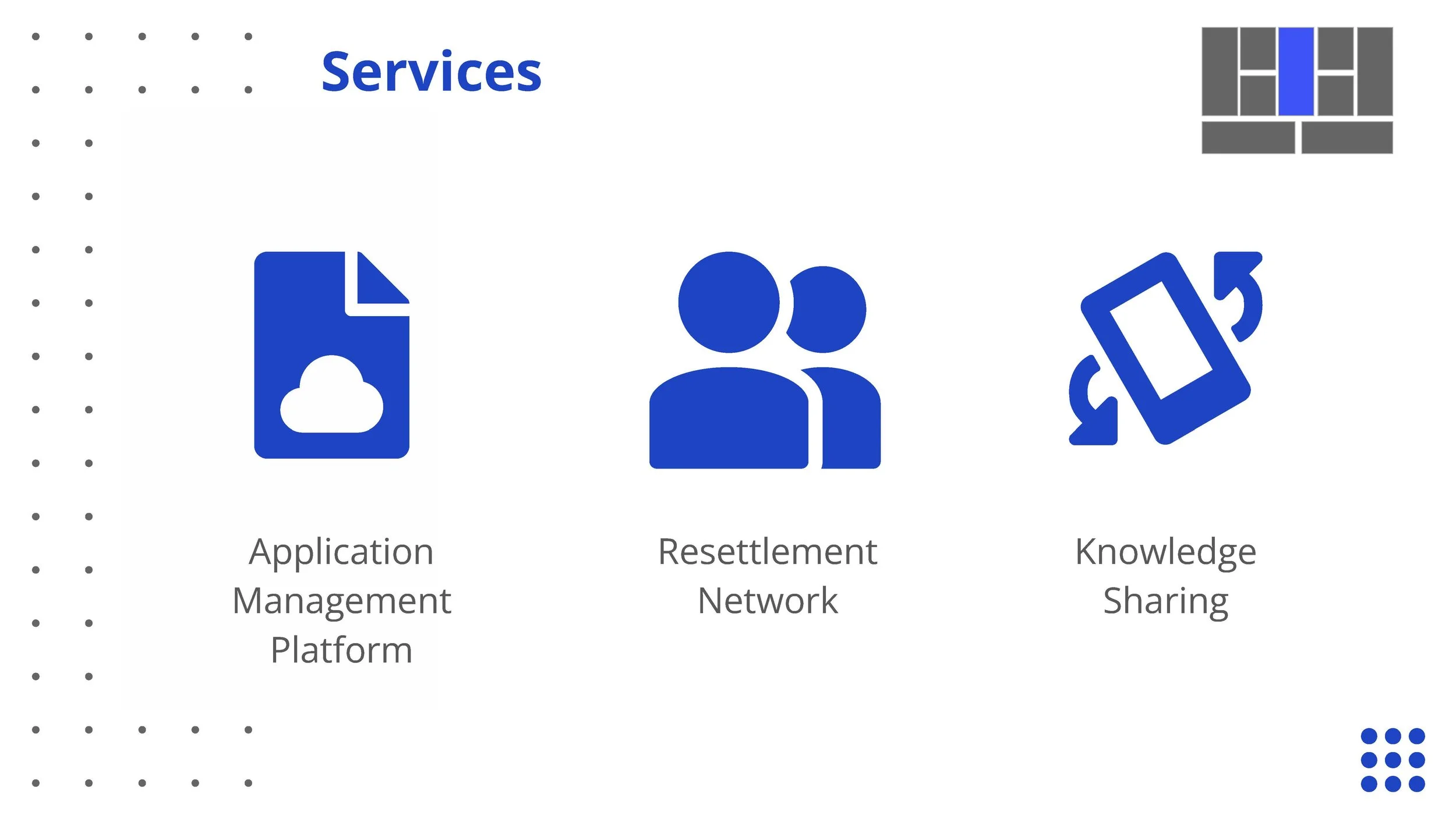
Centralized information access for Refugees and Sponsors.
A community-based platform facilitating connections between sponsors and refugees, fostering relationships throughout the process.
Supportive features like training videos and a Canadian sponsor community, enhancing integration and mutual understanding.
Bibliography
Alexander, L. (2020, September 14). How Identification Technology is Aiding the Refugee Crisis. BORGEN. https://www.borgenmagazine.com/identification-technology/
Bither, Jessica. Ziebarth, Astrid. (June 2020). AI, digital identities, biometrics, blockchain: A primer on the use of technology in migration management. Migration Strategy Group. Retrieved from https://www.gmfus.org/sites/default/files/Bither%20%20Ziebarth%20%202020%20-%20technology%20in%20migration%20management%20primer%202.pdf
Boudjikanian, Raffy. (November 23,2021). Canada struggling to meet refugee target number for 2021. Retrieved from https://ici.radio-canada.ca/rci/en/news/1841945/canada-struggling-to-meet-refugee-target-number-for-2021
Butcher, M. Here are 25 of the most innovative new projects using tech to help refugees and NGOs – TechCrunch. (n.d.). Retrieved December 9, 2021, from https://techcrunch.com/2018/10/27/here-are-25-of-the-most-innovative-new-projects-using-tech-to-help-refugees-and-ngos/
Canadian Council for Refugees. Recognizing Successes, acting for change. Retrieved from https://ccrweb.ca/sites/ccrweb.ca/files/static-files/40thanniversary.htm
Canadian Council for Refugees. (January 2016). Renewing Canada’s Private Sponsorship of Refugees Program. Retrieved from https://ccrweb.ca/sites/ccrweb.ca/files/renewing-psr-jan-2016.pdf
Citizenship and Immigration Canada. Private Sponsorship of Refugees Program. Sponsorship Agreement Holders of Canada. Best Practices Series Volume 1. The Refugee Sponsorship Training Program. Retrieved from https://www.rstp.ca/wp-content/uploads/2014/03//bestpracticevol1.pdf
Clarke, J. N., Author, V. A. B. T., Marlow, T., & Author, V. A. B. T. (2021, March 25). The cracks in our admired private refugee sponsorship program. Policy Options. https://policyoptions.irpp.org/magazines/january-2020/the-cracks-in-our-admired-private-refugee-sponsorship-program/
Cleroux, P. (2021). 2021 Economic Outlook for Canada. BDC.Ca. https://www.bdc.ca/en/articles-tools/blog/2021-economic-outlook-canada
Culbertson, S., Dimarogonas, J., Costello, K., & Lanna, S. (2019). Crossing the Digital Divide: Applying Technology to the Global Refugee Crisis. RAND Corporation. https://doi.org/10.7249/RR4322
Dykstra-DeVette, Tiffany. Canray, Heather. (January 24, 2018). Crystalline Empowerment: Negotiating Tensions in Refugee Resettlement. Retrieved from https://journals-sagepub-com.ocadu.idm.oclc.org/doi/full/10.1177/0170840617747922?utm_source=summon&utm_medium=discovery-provider
Fraser, N. (n.d.). Reassessing Canada’s refugee policy in the COVID-19 era. Policy Options. Retrieved December 9, 2021, from https://policyoptions.irpp.org/magazines/june-2020/reassessing-canadas-refugee-policy-in-the-covid-19-era/
Ghosh, P. (2021, August 22). Which countries are taking in Afghan refugees and which countries are not? Hindustan Times. https://www.hindustantimes.com/world-news/which-countries-are-taking-in-afghan-refugees-and-which-countries-are-not-101629646800845.html
Gladstone, R., & Austen, I. (2021, September 28). Canada Doubles Its Afghan RefugeeResettlement Target to 40,000 People. The New York Times. https://www.nytimes.com/2021/09/27/world/americas/canada-afghanistan-refugees.html
Global Sponsorship Initiative. (2020). Co-Designing Sponsorship Programs. https://refugeesponsorship.org/_uploads/60315288614ef.pdf
Government of Canada. (July 07, 2016). Evaluation of the Resettlement Programs (GAR, PSR, BVOR and RAP). Retrieved from https://www.canada.ca/en/immigration-refugees-citizenship/corporate/reports-statistics/evaluations/resettlement-programs.html#tbl-6
Government of Canada. (July 07, 2016). Evaluation of the Resettlement Programs (GAR, PSR, BVOR and RAP). Retrieved from https://www.canada.ca/en/immigration-refugees-citizenship/corporate/reports-statistics/evaluations/resettlement-programs.html#tbl-6
GRSI. (n.d.). Retrieved December 9, 2021, from https://refugeesponsorship.org/
Hashim, A. (2021, September 23). Thousands of Afghans seeking refuge in regional countries: UNHCR |. Al Jazeera. https://www.aljazeera.com/news/2021/9/23/afghanistan-refugees-pakistan-iran-unhcr
ID2020 | Digital Identity Alliance. (n.d.). ID2020. Retrieved December 9, 2021, from https://id2020.org/
Immigration, R. and C. C. (2018). Guide 2200—Groups of Five to privately sponsor refugees. https://www.canada.ca/en/immigration-refugees-citizenship/services/application/application-forms-guides/guide-sponsor-refugee-groups-five.html
Immigration, R. and C. C. (2021a, August 13). Canada expands resettlement program to bring more Afghans to safety [News releases]. https://www.canada.ca/en/immigration-refugees-citizenship/news/2021/08/canada-expands-resettlement-program-to-bring-more-afghans-to-safety.html
Immigration, R. and C. C. (2021b, August 19). Supporting Afghan nationals: Special measures for Afghan applications. https://www.canada.ca/en/immigration-refugees-citizenship/services/refugees/afghanistan/afghans-canada.html
Immigration, R. and C. C. (2021c). Grants and Contributions in Support of ResettlementAssistance Program [Not available]. https://www.canada.ca/en/immigration-refugees-citizenship/corporate/transparency/program-terms-conditions/resettlement-assistance-program.html
Immigration Refugee Board. (2021). Recent trends—Immigration and Refugee Board of Canada. https://irb.gc.ca/en/statistics/Pages/volume-reports.aspx
Johnston, A. (2019, July 3). “Thin veneer of tolerance”: Most Canadians oppose accepting more refugees, poll suggests | CBC News. CBC. https://www.cbc.ca/news/canada/manitoba/refugees-tolerance-1.5192769
Kent, J. (2018, June 18). The Role of Technology in Addressing the Global Migration Crisis. The Role of Technology in Addressing the Global Migration Crisis.”
Kinstler, Linda. (May 17, 2019). Big tech Firms are racing to track climate refugees. MIT Technology Review. Retrieved from https://www.technologyreview.com/2019/05/17/103059/big-tech-firms-are-racing-to-track-climate-refugees/
Kumar, V. (2015, May 20). Making “Freemium” Work. Harvard Business Review. https://hbr.org/2014/05/making-freemium-work
Lanphier, Michael. (December 2003). Sponsorship: Organizational, Sponsor, and Refugee Perspectives. Dordretcht Vol. 4, Iss. 2. Retrieved from https://www.proquest.com/docview/213851379?pq-origsite=summon&accountid=12991
Osterwalder, A. (2010). Business model generation: A handbook for visionaries, game changers, and challengers. John Wiley & Sons.
Petric, S. (2021). As some countries welcome Afghanistan’s refugees, others want to keep them out. CBC News. https://www.cbc.ca/news/world/afghan-refugees-where-are-they-going-1.6167438
Refugees, U. N. H. C. for. (n.d.). Iris scan system provides cash lifeline to Syrian refugees in Jordan. UNHCR. Retrieved December 9, 2021, from https://www.unhcr.org/news/latest/2015/3/550fe6ab9/iris-scan-system-provides-cash-lifeline-syrian-refugees-jordan.html
Refugee Sponsorship Training Program. Interview preparation. Retrieved from https://www.rstp.ca/en/infosheet/interview-preparation-2/
Refugee Sponsorship Training Program. (November 2012). Case Assessment Chart. Retrieved from https://www.rstp.ca/wp-content/uploads/2015/02/Case-Assessment-Chart-Fact-Sheet.pdf
Samuel, S. (2018). Canada Has Started Rejecting More Refugee Claims—Why? - The Atlantic. Atlantic. https://www.theatlantic.com/international/archive/2018/05/theres-a-perception-that-canada-is-being-invaded/561032/
Shankar, P. (2021). EU, fearful of refugee crisis, delays response on Afghan asylum. Al Jazeera. https://www.aljazeera.com/news/2021/10/15/eu-fearful-of-refugee-crisis-delays-response-on-afghan-asylum-2
Solf, B., & Rehberg, K. (2021). The Resettlement Gap: A Record Number of Global Refugees, but Few Are Resettled - World. ReliefWeb. https://reliefweb.int/report/world/resettlement-gap-record-number-global-refugees-few-are-resettled
Techfugees – A tech community response to the needs of refugees. (n.d.). Retrieved December 9, 2021, from https://techfugees.com/
Transatlantic Council on Migration. (2016, December). Digital Humanitarianism: How Tech Entrepreneurs Are Supporting Refugee Integration. https://www.migrationpolicy.org/sites/default/files/publications/TCM-Asylum-Benton-FINAL.pdf
Treviranus, B. Casasola, M. (Spring 2003). Canada’s Private Sponsorship of Refugees program: A Practitioners Perspective of its Past and Future. Journal of International Migration and Integration, vol. 4, no. 2, 2003, pp. 177-202. Retrieved from https://www.proquest.com/docview/213851033?pq-origsite=summon&accountid=12991
UHNCR. (April 2020). Space and imagination: rethinking refugees’ digital access. Retrieved from https://www.unhcr.org/innovation/wp-content/uploads/2020/04/Space-and-imagination-rethinking-refugees’-digital-access_WEB042020.pdf
UNHCR. (March 23, 2015). Iris Scan system provides cash lifeline to Syrian refugees in Jordan. Retrieved from https://www.unhcr.org/news/latest/2015/3/550fe6ab9/iris-scan-system-provides-cash-lifeline-syrian-refugees-jordan.html
van Haren, I. (2021, November 3). Canada’s Private Sponsorship Model Represents a Complementary Pathway for Refugee Resettlement. Migrationpolicy.Org. https://www.migrationpolicy.org/article/canada-private-sponsorship-model-refugee-resettlement